Applied Practice 1 

Identifying Your Population of Focus 

  • Format: Self-paced
  • Level: Applied Practice
  • Modules: 1
  • Time: 30 minutes
  • Certificate upon completion  (continuing education credits are not provided at this time) 
Good community engagement starts with a clear sense of who you're trying to reach and whose voice might be missing from the table. Without that clarity, it's easy to build programs based on assumptions rather than actual community need. 
Empty space, drag to resize
This module helps you identify a population of focus relevant to your work, using guiding principles that center equity and reduce guesswork. You'll also take an honest look at who is currently engaged in your department's work and who isn't yet. 
Is This Course For You?

Built for public health engagement practitioners.

If your work involves connecting with communities, identifying who you serve or noticing who's missing from the table, this applied practice module was designed for you.
  • You want to engage community members but aren't sure where to start or who to prioritize.  
  • You're concerned your programs may be built on assumptions rather than real community input.  
  • You want a clear, repeatable way to identify gaps in who your department currently reaches.  
Is This Course For You?

Built for public health communicators.

If your work involves sharing information, building trust or moving people to action, this course was designed for you.
  • You communicate about public health work and want to do it more effectively.
  • You face challenges like misinformation, shifting narratives and limited time.
  • You need practical tools you can apply immediately in your day-to-day work.
  • You want a clear, repeatable process for crafting stories that stick.

What to Expect

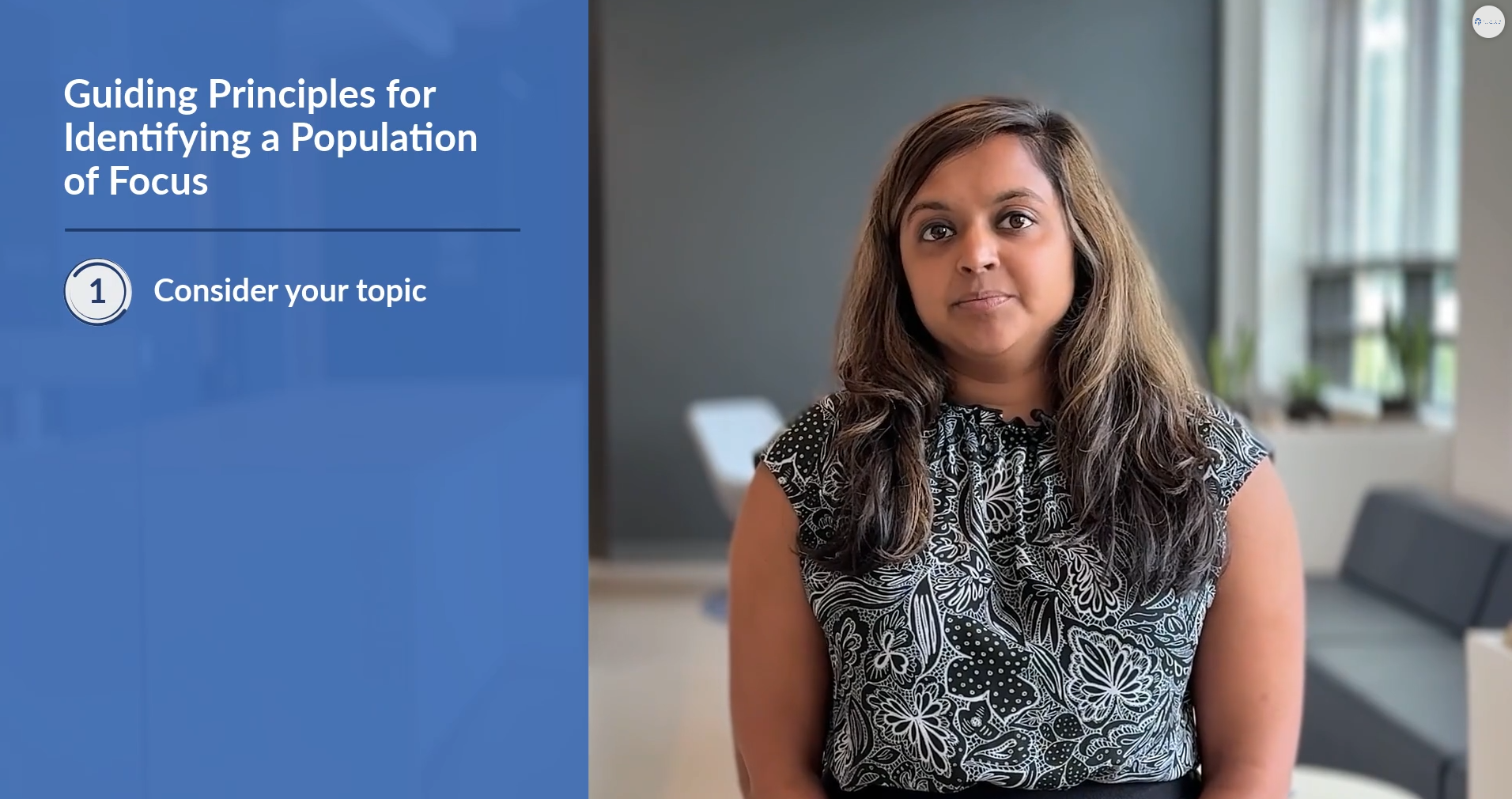
Presenter beside a slide titled "Guiding Principles for Identifying a Population of Focus," showing step 1: Consider your topic

A practical framework for identifying populations of focus . 
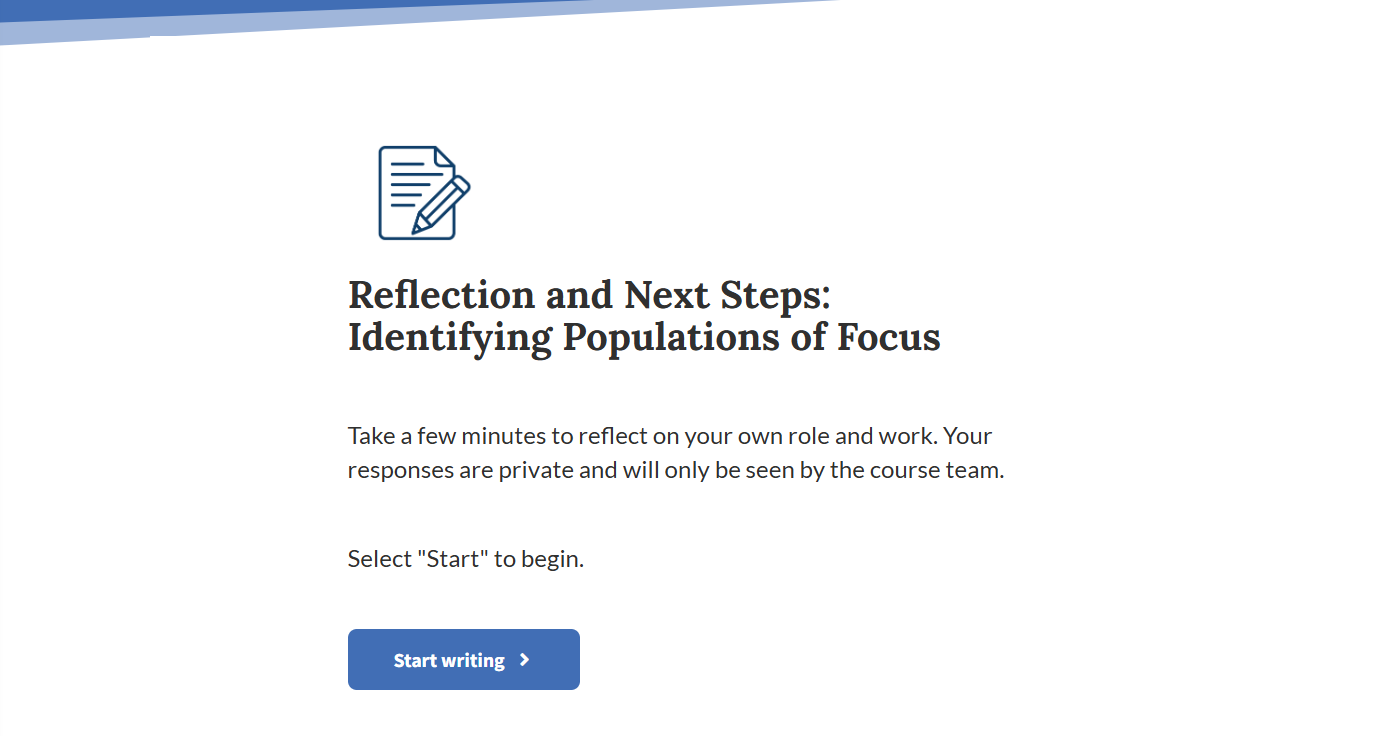
Reflection page titled "Reflection and Next Steps: Identifying Populations of Focus," with instructions to reflect privately on your role and a "Start writing" button

Guided reflection on your department's current engagement gaps . 
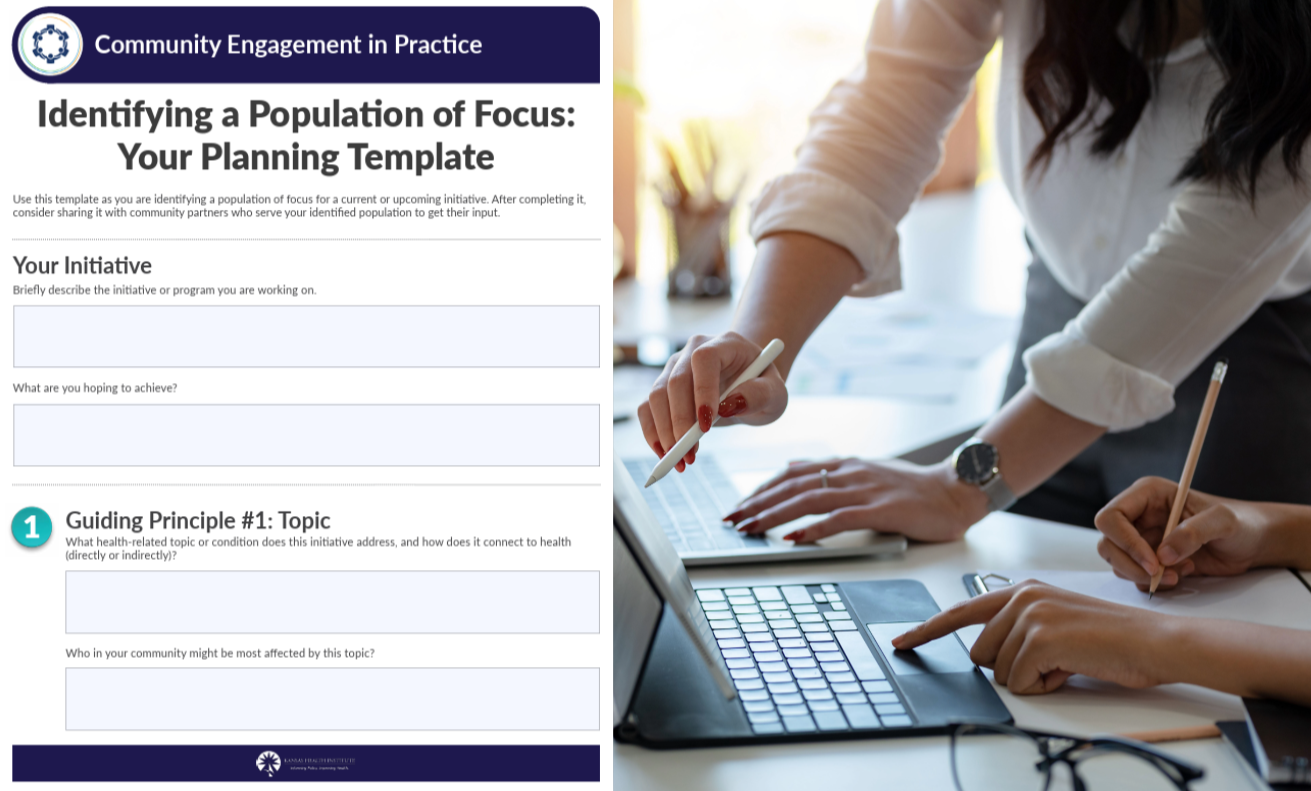
Planning template handout titled "Identifying a Population of Focus: Your Planning Template," beside a photo of people working together at a laptop

Tools you can apply immediately to your next program or initiative .

Course Modules

Meet the Course Presenter

Avanthi Chatrathi, M.P.H.

Analyst, Kansas Health Institute

Chatrathi conducts research, policy analysis and technical support related to our work on population health, access to care and other topics.

Course Authors: Avanthi Chatrathi, M.P.H., Rebecca Andrade M.A., 
Samiyah Para-Cremer Moore, M.Sc., and Kevin Kovach, Dr.P.H., M.Sc.

Acknowledgements

The course authors would like to thank KHI colleagues Stewart Cole, Tatiana Lin, Karsen DeWeese, Theresa Freed and Kari Bruffett, for their contributions to the design and development of the course. KHI also thanks the following individuals for their feedback on the design and structure of this program along the way: Candice Sauers, Deputy Director, Saline County Health Department; Lynnette Redington, Director, Harvey County Health Department; Megan Gottschalk-Hammersmith, Assistant Director, Community Health Operations, Reno County Health Department; Candace Davidson, Health Promotion Supervisor, Reno County Health Department.  

This work is supported by funds made available from the Centers for Disease Control and Prevention (CDC) of the U.S. Department of Health and Human Services (HHS), National Center for State, Tribal, Local and Territorial Public Health Infrastructure and Workforce (PHIC), under award number 6 NU38PW000037-02-01. The contents are those of the author(s) and do not necessarily represent the official views of, nor an endorsement by, CDC/HHS, or the U.S. Government.

Notice of Nondiscriminatory Policy as to Students

The Kansas Health Institute admits students of any race, color, national and ethnic origin to all the rights, privileges, programs and activities generally accorded or made available to students at the school. It does not discriminate on the basis of race, color, national and ethnic origin in administration of its educational policies, admissions policies, scholarship programs and other school-administered programs and conferences. Please call 785-233-5443 with any questions.
Meet Your Community Manager

Avanthi Chatrathi, M.P.H.

Avanthi is KHI Learning's community manager and your point of contact for questions, feedback, and support. Whether you're navigating a course or just getting started, she's here to help.
Meet Your Community Manager

Avanthi Chatrathi, M.P.H.

Avanthi is KHI Learning's community manager and your point of contact for questions, feedback, and support. Whether you're navigating a course or just getting started, she's here to help.

Follow us on social.